









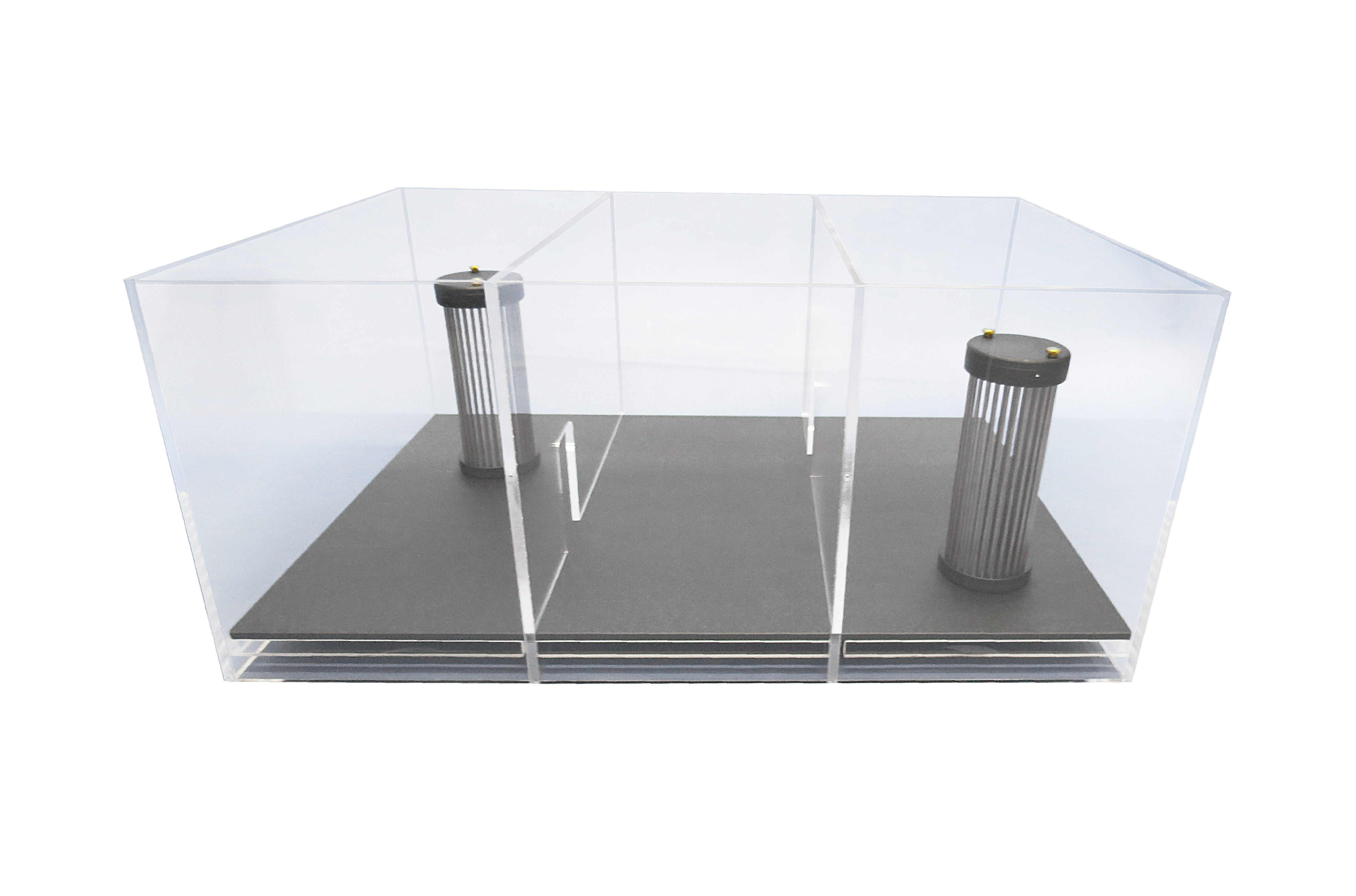
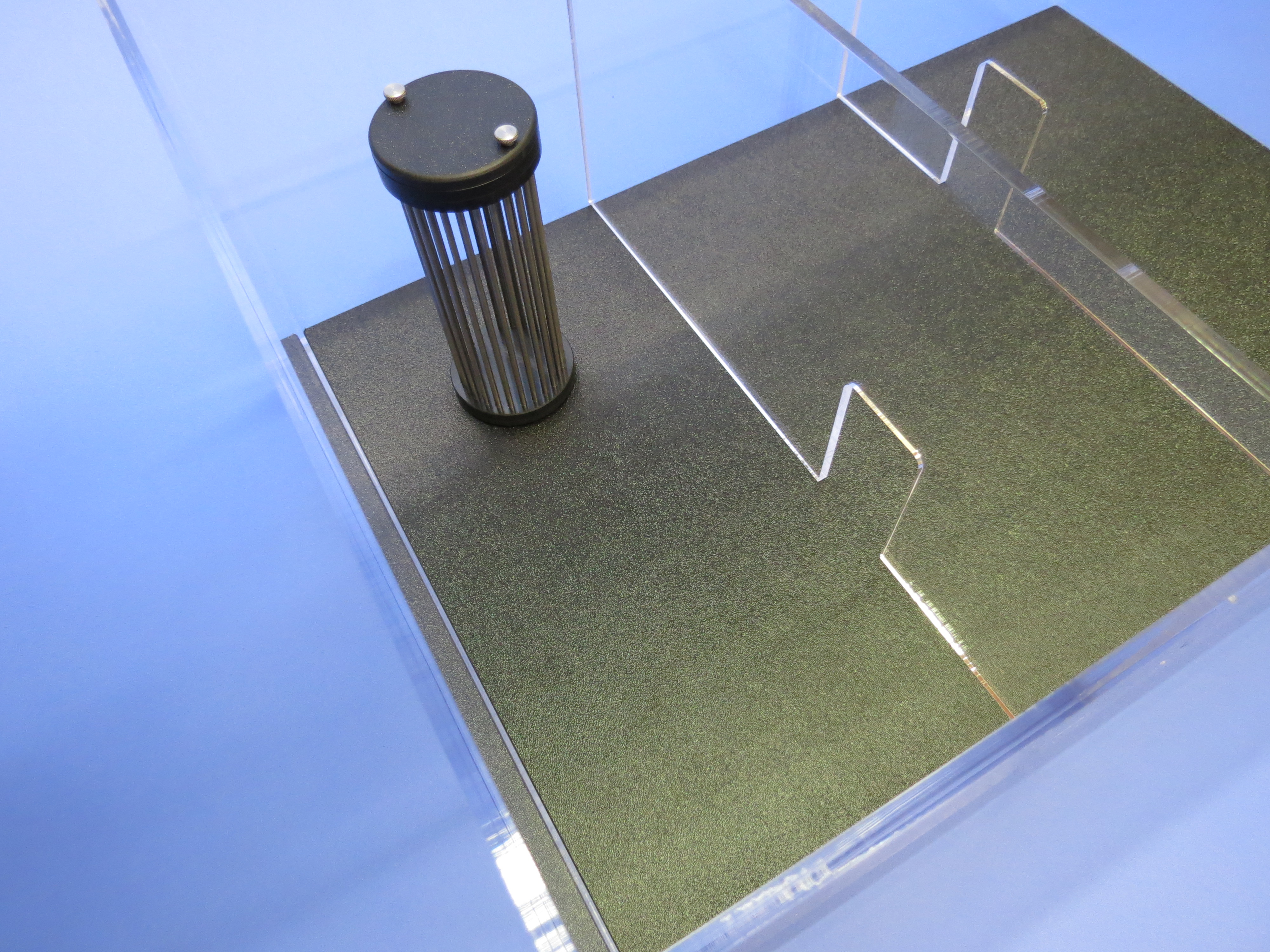
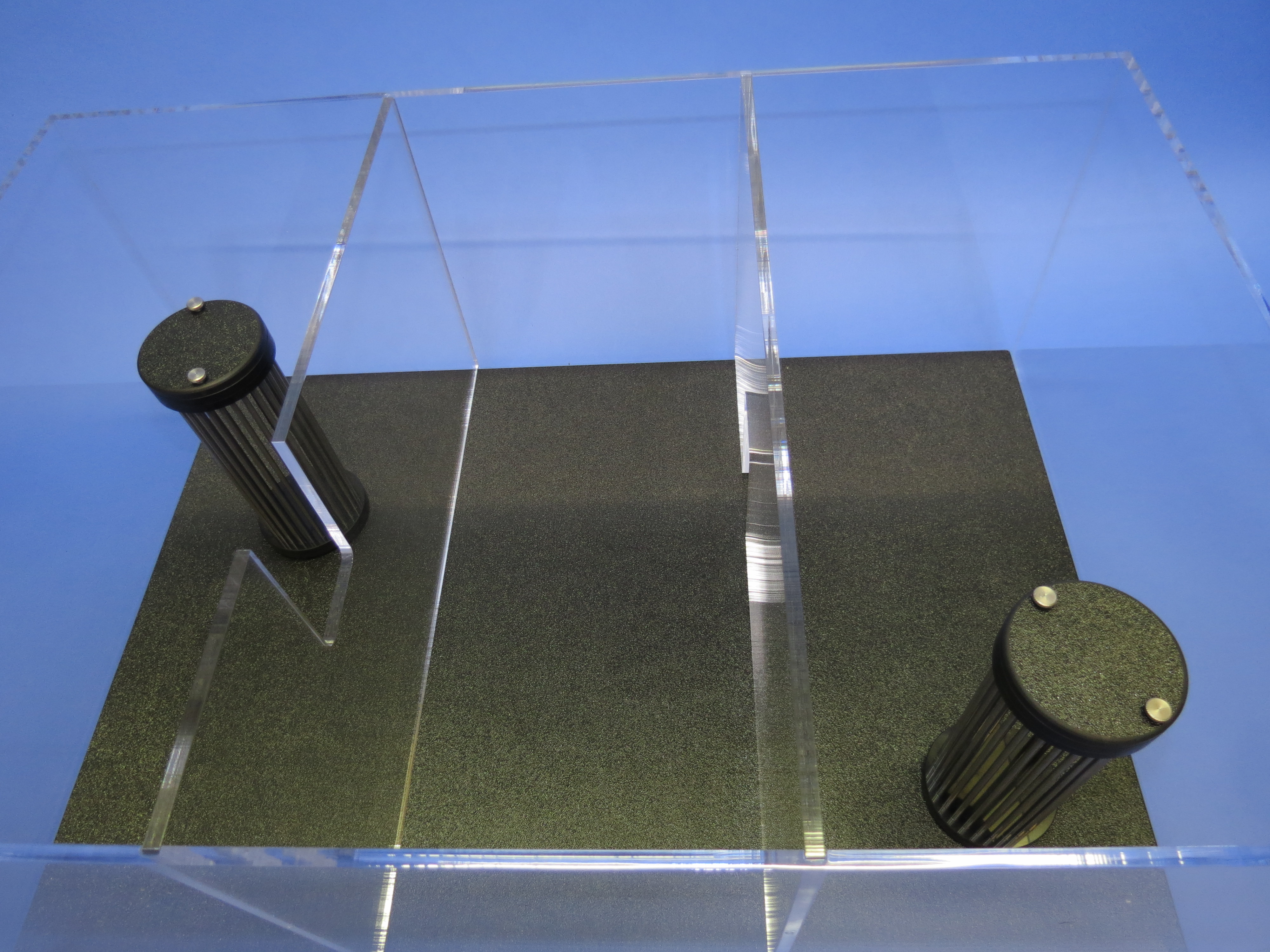
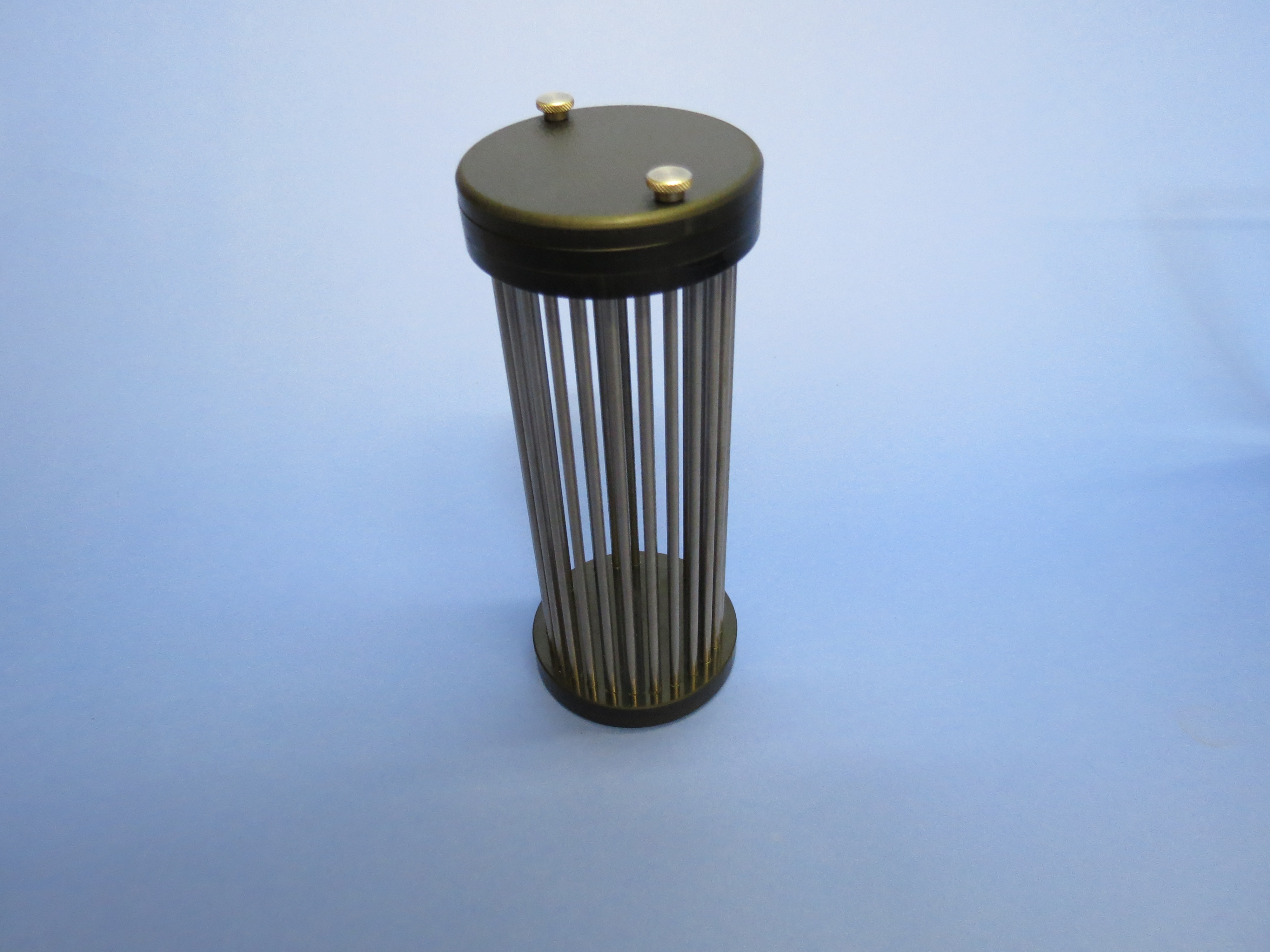
The Sociability Apparatus is specifically designed for the Sociability Interaction Test, one of the most widely used behavioral assays for evaluating social preference and social novelty in mice. This three chamber enclosure provides a controlled environment for assessing social behavior, making it an ideal solution for neuroscience, behavioral, and autism-related research. The removable walls provide flexible chamber configurations, allowing researchers to temporarily isolate one side for habituation or free exploration from the wire containment cage, or to open all three chambers to facilitate unrestricted exploration during sociability testing. Made of acrylic and used often along with a video tracking system such as SDI’s ANY-maze video tracking system.
The apparatus features removable acrylic walls that allow researchers to configure the chambers for different testing protocols. One chamber can be temporarily blocked to facilitate habituation or acclimation, or all three chambers can be opened to enable unrestricted exploration during the Sociability Interaction Test. This flexible design supports consistent, repeatable behavioral testing while simplifying experimental setup.
Constructed from durable, clear acrylic, the Sociability Apparatus provides excellent visibility for both direct observation and automated video analysis. It is commonly paired with video tracking software, such as SDI’s ANY-maze® Video Tracking System, to accurately measure time spent in each chamber, interaction duration, chamber preference, and locomotor activity.
Door Dimension: 2” (W) x 3.5” (H)3 equal width compartments: 24” (W) x 16” (D) x 9” (H)
Stranger Enclosure: .125” (D) x.25” (Spacing)Stranger Enclosure: 2.75” (D) x 6.75” (H)
 Back to All products
 Download data sheet