
The Pure Tone Kit allows the user a full range of frequencies driven by an external function generator and audio amplifier to deliver tones. The Pure Tone Kit can assist in research for hearing loss and tinnitus. This system is an add-on to an existing SR-Lab set up.
Blog
Standardization Unit
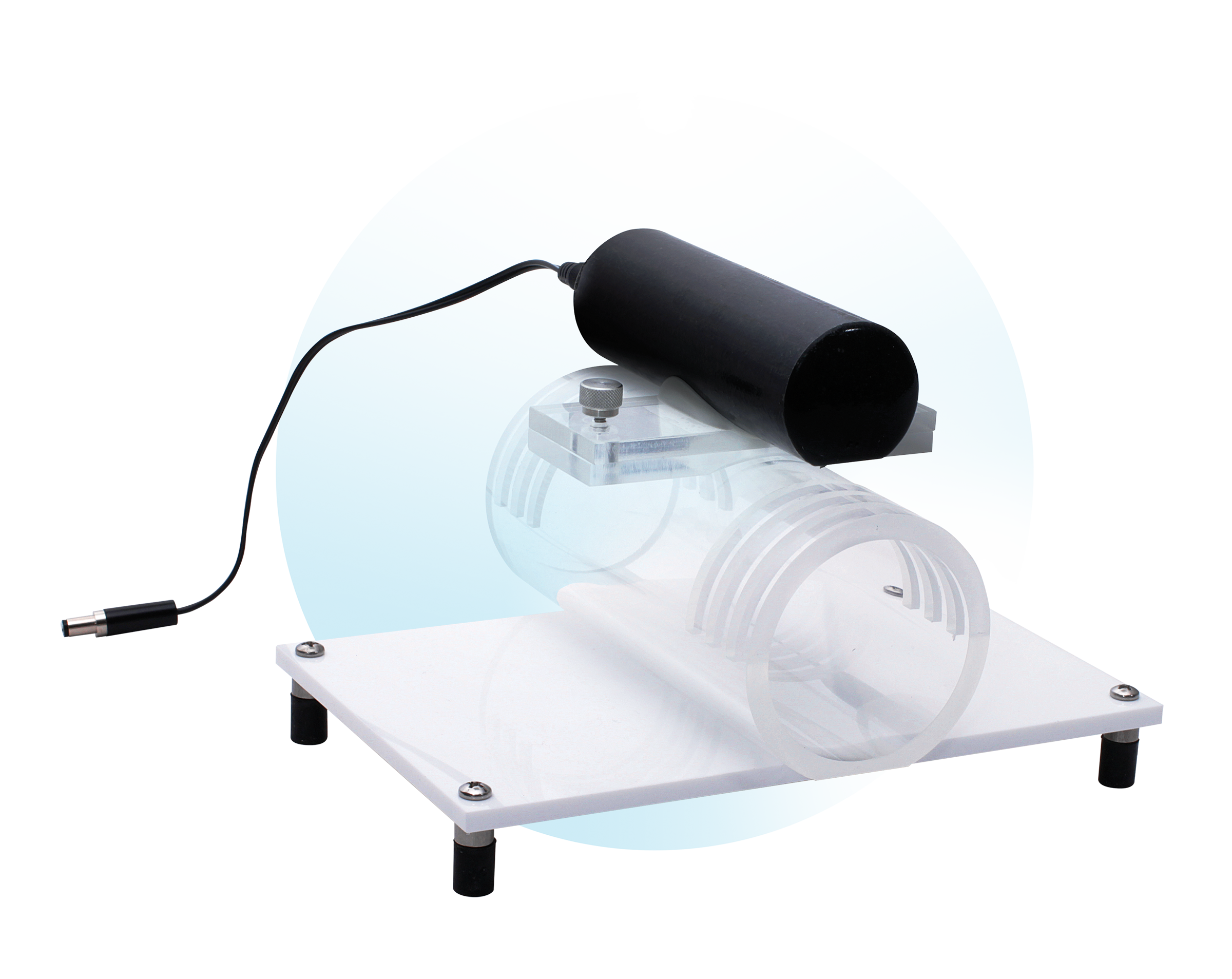
SR-Lab Standardization Unit
The SR-Lab Standardization Unit confirms the reliability of all startle animal enclosures; both among enclosures and over time, by transmitting a precise series of pulses to the sensor located on each enclosure. Using the SR-Lab Standardization Unit, you can adjust each animal enclosure to the same base line value, thus standardizing the responses amongst test cabinets. This unit is required for any SR-Lab multi-station system.
SR-Lab Air Puff Kit
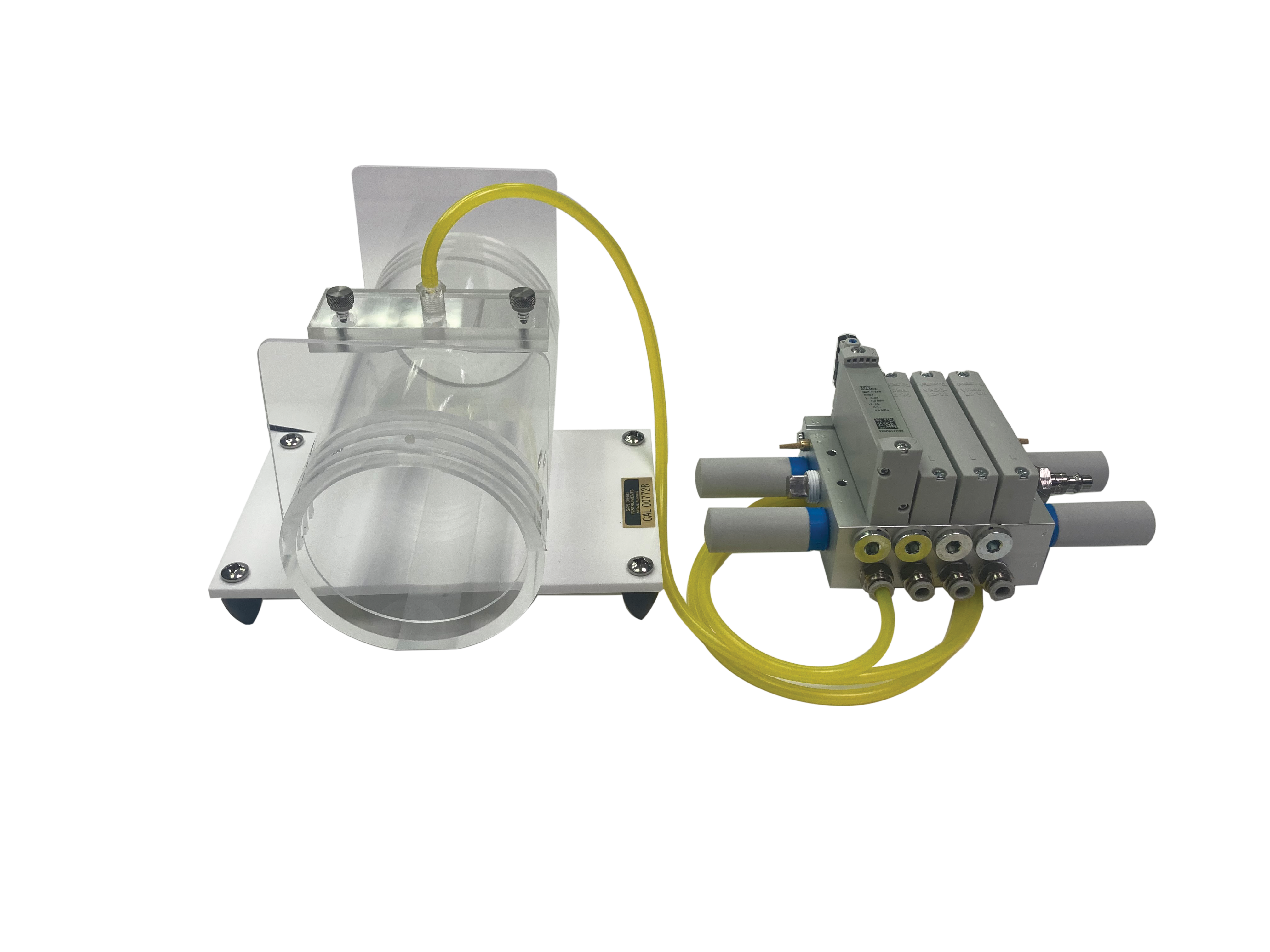
Air Puff Kit
The Air Puff Kit is used as an alternative stimulus to the built in acoustic stimulus. Each kit consist of a manifold unit to be able to deliver the air puff directly to the top of the animals back. This system is a Add On Kit to an existing SR-Lab system
SR-Lab Potentiated Startle Kit
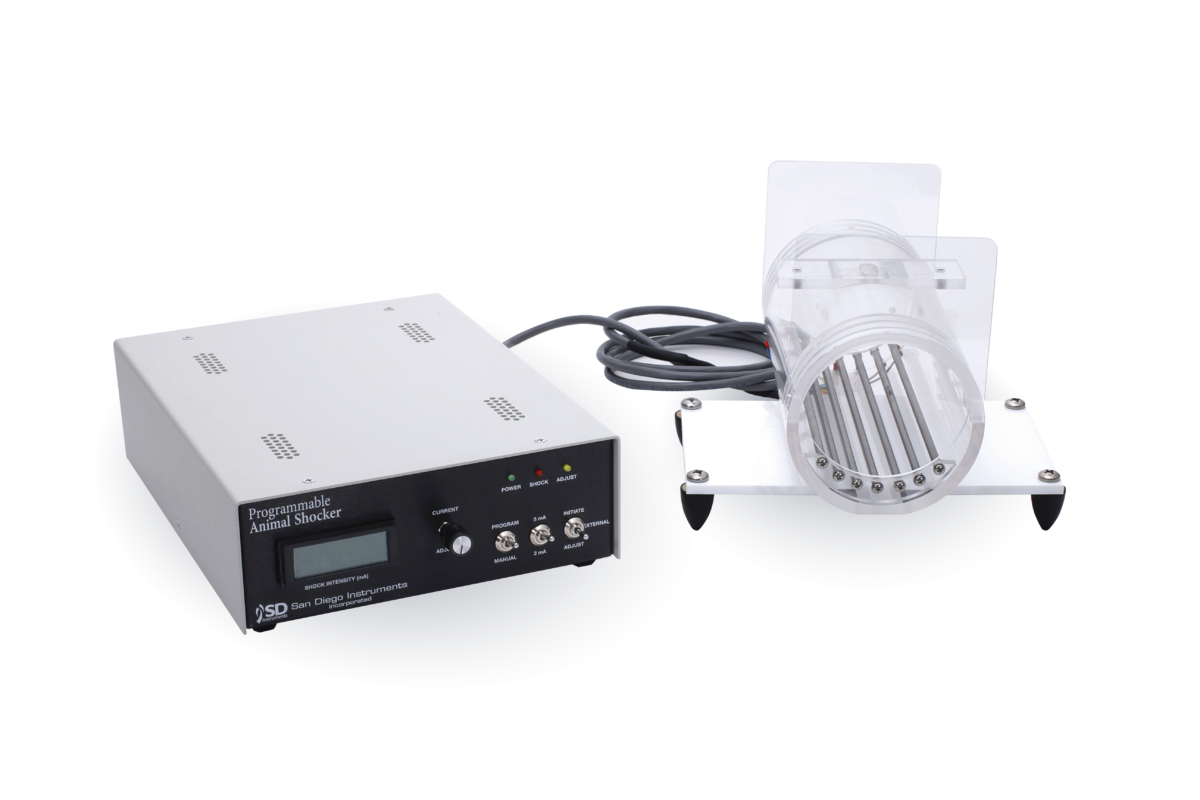
Potentiated Startle Response Kit
The SR-Lab Potentiated Startle Response Kit pairs foot shock with a conditioning stimulus for potentiated startle studies. The conditioning stimulus can be acoustic, light, tactile or user-supplied. The shocker display shows the actual amplitude delivered and is run by the SR-Lab software. The Fear Potentiated Startle Kit includes a shocker with eight (8) scrambled outputs, shock grid and cue light. The stainless steel shock grid floor slides easily into the enclosure and is removable for cleaning.
Electronic Von Frey
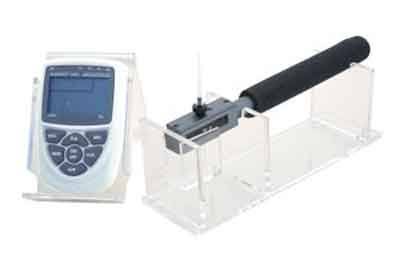
Electronic Von Frey
IITC Life Science created the original Electronic von Frey Aesthesiometer which is used to assess mechanical allodynia with rigid tips (threshold) and the “SupertipsTM” (flexible von Frey hairs) are used for sensory test on all test subjects from all animal test subjects and human studies. The current Electronic von Frey Aesthesiometer series enables researchers to use up to 5 total test disciplines with a single unit. Multiple users have the ability to use one single unit for multiple studies.
Tail Flick Analgesia Meter
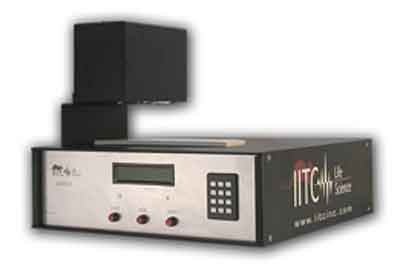
Tail Flick Analgesia Meter
The IITC Tail Flick Test apparatus meter measures latency and/or temperature threshold when detecting properties of narcotic and strong non-narcotic drugs on mice and rats. A built-in timer is automatically stopped when the animals’ tail flicks out of the beam of light and the test result will be displayed on the readout
Plantar Analgesia Meter

Plantar Analgesia Meter
The IITC Plantar Analgesia Meter uses the Hargreaves Method for paw stimulation when measuring he properties of narcotic and stronger non-narcotic drugs. The IITC Plantar Analgesia Meter can be used on mice, rats and other animals (cats, rabbits). With our exclusive “idle state” guide light and guide mirror on top of the test head (heat source) one is assured that the placement of the heat source is focused exactly on the desired paw of the test subject. The unit comes with animal enclosures to test 12 mice or 6 rats allowing rapid testing of large numbers of animals.
Plethysmometer Paw Volume Meter
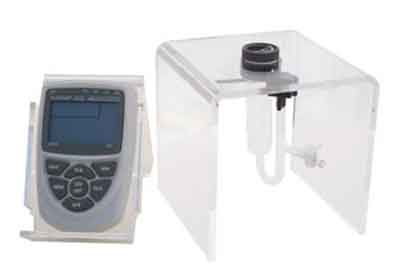
Plethysmometer Paw Volume Meter
IITC’s Paw Volume Meter enables researchers to measure the effectiveness of anti-inflammatory agents and agents to reduce edemic conditions. The paw is inserted into a special water cell and the change in pressure is measured.
Paw Pressure Test Apparatus
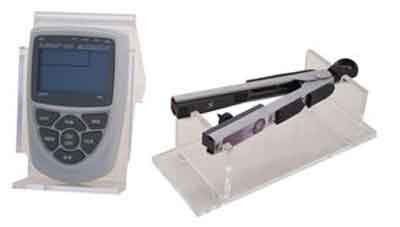
Paw Pressure Test Apparatus
IITC the very first digitally controlled paw pressure meter. The unit allows the user to obtain data for analgesic drug testing via the Randall-Selitto method. The hand held Pressure Applicator applies a force to the extremity of the test subjects. Continuous readings of the force applied are provided. The last maximum force applied(Peak) during the test is held in the meter to allow recording of the Peak force for each animal.
Incapacitance Meter
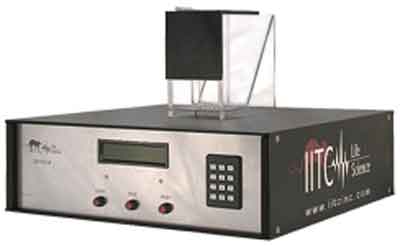
Incapacitance Meter
The IITC Incapacitance Meter is used for test assessment of pain and or inflammation of the hind limbs on mice, rats and birds. The technique known as dynamic weight bearing enables the test on both limbs allowing a clean stress free correlation to the paw pressure test.